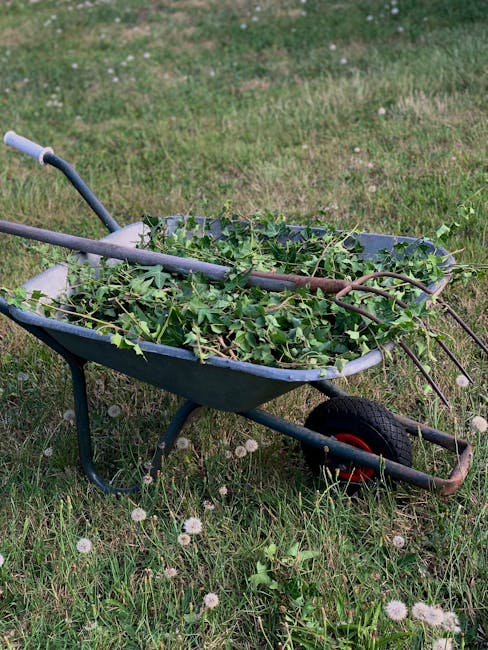
When to DIY lawn care and when to hire professional gardeners
Keeping a lawn in good shape sounds simple enough until you're standing there with a blunt mower, a patchy border, and the uneasy feeling that the grass is winning. Truth be told, when to DIY lawn care and when to hire professional gardeners is less about pride and more about matching the job to your time, tools, and tolerance for a bit of trial and error. Some tasks are ideal for a Saturday morning. Others are the sort of jobs that quietly eat weekends, create avoidable damage, or become far more expensive when they're not handled properly the first time.
This guide breaks down the decision in plain English. You'll see which lawn care jobs are genuinely manageable at home, which ones are worth passing to a professional, how to judge the risk, and what a sensible maintenance routine looks like across the seasons. If you've ever wondered whether you should just crack on yourself or bring in help, you're in the right place.
Why When to DIY lawn care and when to hire professional gardeners Matters
A lawn is one of those garden features that looks effortless when it's healthy and slightly tragic when it isn't. The problem is that people often make the decision based on cost alone. That's understandable, but it can be short-sighted. A few inexpensive DIY passes can keep things ticking over, yet repeated mistakes can lead to thinning grass, uneven growth, moss, soil compaction, poor drainage, or even accidental damage to edges, irrigation, paving, and nearby planting.
The choice matters because lawn care sits on a spectrum. Mowing and light raking are usually straightforward. Scarifying, aeration, re-turfing, major weed recovery, or dealing with steep ground and awkward access? That's a different story. And to be fair, many people don't realise how much time the "easy" jobs take when the lawn is bigger than expected or the weather has been doing its usual British thing.
Professional gardeners bring repeatability, equipment, and judgement. DIY gives you flexibility and lower immediate spend. The best answer often sits in the middle: do the routine jobs yourself, then call in support when the lawn needs restoration, specialist treatment, or a more dependable finish. If your garden forms part of a broader maintenance plan, it can also help to explore regular garden maintenance so the lawn doesn't become a once-a-year rescue mission.
How When to DIY lawn care and when to hire professional gardeners Works
The decision works best when you break lawn care into categories rather than thinking of it as one big task. In practice, there are three levels:
- Routine upkeep - mowing, edging, leaf clearing, light weeding, watering during dry spells, and quick visual checks.
- Corrective care - scarifying, aerating, overseeding, feeding, dealing with moss, patch repair, and improving lawn health.
- Restoration or specialist work - severe compacted soil, drainage issues, large dead patches, major overgrowth, re-leveling, or integrating lawn work into a wider landscape redesign.
DIY is usually reasonable when the task is simple, the lawn is accessible, and the consequences of a small mistake are limited. Hiring a professional gardener starts to make more sense when the job is technical, time-sensitive, physically demanding, or likely to affect the long-term condition of the turf.
For example, mowing a level front lawn with a decent domestic mower is one thing. But trying to recover a tired rear lawn that's full of moss, slopes slightly, and borders a narrow path? That's where the little details start to matter. Mowing height, blade sharpness, timing after rain, and how much material gets removed all influence the result. It's not glamorous, but lawn care rarely is.
Professionals also bring coordination. If your lawn problems are connected to hedge shade, messy borders, or larger garden changes, a wider landscaping plan may be a better fit. In that case, services such as landscape gardening or landscaping can make more sense than repeated isolated fixes.
Key Benefits and Practical Advantages
There's a fair argument for both approaches, and the right answer depends on what you value most: cost, convenience, control, or long-term results.
Benefits of DIY lawn care
- Lower immediate cost - you're paying mainly for tools, materials, and your own time.
- Flexibility - you can mow or tidy up when it suits you.
- Hands-on control - you decide the pace, the finish, and how often the work happens.
- Good for light maintenance - smaller lawns and routine tasks are often perfectly manageable.
Benefits of hiring professional gardeners
- Better results on complex jobs - especially where lawn health is already compromised.
- Time savings - very real if you have a busy household or limited weekends.
- Access to specialist equipment - scarifiers, aerators, commercial mowers, and more robust tools.
- Reduced risk of damage - particularly around edges, slopes, delicate borders, and poor drainage areas.
- Consistency - useful if you want the lawn to look presentable all year rather than occasionally heroic.
A small but important benefit of using professionals is perspective. Sometimes what looks like a mowing issue is actually a soil issue, a shade issue, or a maintenance scheduling issue. A knowledgeable gardener will spot that quickly instead of throwing fertiliser at the problem and hoping for the best. That's not a criticism of DIY; it's just experience doing its quiet work.
Expert summary: DIY is best for routine, low-risk upkeep. Hire professionals when the job affects turf health, requires specialist machinery, or could turn into a bigger repair if it goes wrong.
Who This Is For and When It Makes Sense
This decision is relevant to a few different kinds of people, and the right answer is not the same for all of them.
Homeowners who enjoy basic upkeep
If you have a small to medium lawn, a reliable mower, and a sensible amount of time, DIY makes good sense for routine grass cutting and light tidying. You'll likely be fine handling mowing, edging, and clearing clippings, provided you keep on top of it.
Busy households
If the garden is always slipping to the bottom of the list, professional help can save you from the cycle of overgrowth, frustration, and a very unrelaxing Sunday. Many people start by hiring help for mowing and then add other tasks once they realise how much calmer life feels when the lawn is just done.
Landlords and property managers
If a garden needs to look neat between tenancies or for inspections, consistency matters more than experimentation. A dependable service like lawn mowing is often more economical than recurring emergency tidy-ups.
Older homeowners or anyone avoiding heavy work
There's no medal for wrestling with heavy kit on uneven ground. If the job involves lifting, bending, steep slopes, or repeated trips with equipment, it may be wiser to outsource it.
Anyone dealing with overgrown or neglected lawns
Once grass has become long, wet, tangled, or mixed with debris, the task changes. At that point, the issue is not just mowing; it may be clearance, recovery, and a staged plan. In those cases, garden clearance can be the smarter starting point.
Step-by-Step Guidance
Use this process when deciding whether to tackle the lawn yourself or bring in professional gardeners.
- Assess the lawn size and layout. A compact, flat lawn is far easier to manage than a long, sloped or segmented garden with awkward access.
- Look at the current condition. Healthy grass with minor overgrowth is DIY territory. Patchy turf, compaction, moss, or drainage problems may need expert help.
- Check the equipment you actually have. A mower alone is not enough for every job. Scarifying, edging, aerating, and finishing may require more tools than you expect.
- Think about time honestly. Not aspirationally. Honestly. If the task keeps being delayed, it may be cheaper to hire help than to keep losing weekends.
- Consider safety and access. Tight corners, slippery slopes, hidden stones, tree roots, and heavy lifting all increase the risk of mistakes.
- Decide whether the job is maintenance or recovery. Routine maintenance is DIY-friendly. Recovery work is where professional judgement tends to pay off.
- Choose a hybrid approach if needed. Many households do weekly mowing themselves and bring in professionals for seasonal work, hedge cutting, or reset jobs.
A sensible hybrid approach often works best. You can handle the simple, repeatable parts and let a professional take on the more technical work. That way the lawn stays on track without you spending every free afternoon with a rake in your hand.
Expert Tips for Better Results
These are the details that tend to separate a decent lawn from one that quietly annoys you every time you look at it.
- Mow little and often. Cutting too much at once stresses the grass and leaves a rough finish.
- Keep blades sharp. A blunt mower tears the grass rather than cutting it cleanly.
- Don't mow wet grass if you can avoid it. It clumps, smears, and can make the surface look uneven.
- Vary mowing direction. Repeating the same pattern can encourage ruts and a flattened look.
- Feed and water with restraint. More is not always better. Overfeeding can produce weak growth and extra mowing.
- Watch the edges. A crisp edge makes the whole garden look tidier, even if the centre is only average.
- Respect the seasons. Spring and early autumn are usually the busiest recovery windows, while midsummer and winter call for more caution.
If you do hire professionals, ask what they're actually proposing. Sometimes people assume a gardener will just "sort the grass", but good work usually involves a sequence: cut, clear, inspect, treat, and then maintain. That's how lasting results are built. Bit by bit.
For lawns that sit within a bigger garden refresh, it can also be worth looking at related services such as hedge trimming or tree lopping and removal if shade, leaf fall, or overgrowth is affecting grass health.
Common Mistakes to Avoid
People usually don't damage a lawn because they don't care. They damage it because they're trying to be helpful and rushing a bit.
- Cutting too short. Scalping weakens the lawn and invites weeds and moss.
- Ignoring soil compaction. If the ground is hard and water sits on top, mowing alone won't fix it.
- Using the wrong mower for the space. A tiny domestic mower on a large garden can make the job frustratingly slow.
- Leaving debris in the grass. Twigs, leaves, and soil clumps can smother healthy growth.
- Trying to renovate everything at once. Big recovery work is usually better done in stages.
- Hiring based on price alone. Cheapest is not always best, especially if the job is complex or access is awkward.
- Forgetting the rest of the garden. Overgrown borders, poor drainage, or heavy shade can keep undermining the lawn if they're not addressed too.
One small, very real-world mistake: people often mow after a period of rain because the lawn "looks ready." It may look ready. It is not always ready. If the ground is soft, you can end up with tyre tracks, uneven cuts, and a nice bit of mud clinging to the underside of the mower. Lovely stuff.
Tools, Resources and Recommendations
You don't need a garage full of equipment to manage lawn care well, but the right basics matter.
Useful DIY tools
- Reliable mower suited to lawn size
- Manual or powered edging tool
- Leaf rake or lawn rake
- Sprayer or watering can for spot treatment
- Sturdy gloves and suitable footwear
- Compost bin or garden waste collection method
What professionals often bring
- Commercial-grade mowing equipment
- Scarifiers and aerators for renovation work
- Better handling of larger cut volumes
- Experience reading turf condition quickly
- Safer handling for awkward, steep, or congested gardens
If you are comparing services, it helps to look at what else a gardener offers beyond mowing. A provider with broader garden maintenance capability may be better suited if your lawn issues are tied to wider garden neglect. Likewise, if the whole space needs reshaping, not just tidying, landscape gardening may be the better route.
It's also sensible to check practical business pages before you book. Clear information on pricing and quotes, payment and security, and insurance and safety usually tells you a lot about how a company works.
Law, Compliance, Standards, or Best Practice
For ordinary residential lawn care, there usually isn't a complex legal layer to worry about, but good practice still matters. In the UK, it's wise to treat garden maintenance like any other outdoor work: use equipment safely, follow manufacturer guidance, and take care around pets, children, neighbours, and shared boundaries.
If a job involves climbing, tree work, heavy lifting, power tools, or disposal of substantial green waste, professional gardeners should be working to sensible health and safety procedures. You do not need every detail, but you should expect basic risk awareness, suitable insurance, and careful handling of equipment and waste. That's just good practice.
If you are hiring help, it's reasonable to ask whether the provider has relevant public liability insurance and how they approach site safety. You can also review pages such as health and safety policy and insurance and safety if you want a clearer sense of their standards. That kind of reassurance matters more than people sometimes admit.
Waste handling is another practical consideration. Grass clippings, branches, and clearance material should be managed responsibly, and any larger build-up may need a service aligned with recycling and sustainability. If a garden has become cluttered with mixed debris, old pots, rotting timber, or hedge cuttings, garden clearance is often the right first step rather than simply mowing over the top of it.
Options, Methods, or Comparison Table
Here's a straightforward comparison to help you decide without overthinking it.
| Task type | DIY is a good fit when... | Hire professional gardeners when... |
|---|---|---|
| Routine mowing | The lawn is level, accessible, and you already have decent equipment. | You want a regular finish, have a large area, or are short on time. |
| Edging and tidying | It's a small or medium garden and you're happy with simple hand tools. | You want clean, crisp lines or the borders are very uneven. |
| Scarifying and aeration | You understand the timing and the lawn is only lightly compacted. | The lawn is mossy, compacted, or in obvious decline. |
| Patch repair | The damaged area is small and clearly defined. | There are multiple bare patches or an underlying drainage issue. |
| Overgrown lawn recovery | The overgrowth is light and recent. | The space is heavily neglected, wet, or mixed with debris. |
| Seasonal maintenance plan | You want to stay hands-on and keep costs down. | You want consistency and less guesswork through the year. |
If you're still on the fence, ask yourself one blunt question: do I want to do the job, or do I want the job done well with minimal fuss? Not always the same thing, is it?
Case Study or Real-World Example
A typical example is a suburban family with a medium-sized rear lawn. For most of the year, they manage mowing themselves. It's quick enough, the mower fits through the side access, and the grass is generally healthy. Then spring arrives, the lawn thickens, the hedge throws shade across one corner, and leaf litter from nearby trees starts building up. Suddenly the once-simple routine turns into a recurring chore.
In that situation, DIY still makes sense for the weekly cut, but a professional visit becomes useful for the tougher jobs: a proper seasonal tidy, hedge reduction, a check on drainage, and maybe a clearance of old clippings and debris. The lawn stops looking tired because the cause of the tiredness gets addressed, not just the symptoms. That's the real difference.
We've seen the same pattern in gardens that were initially "just in need of a mow." By the time someone asks for help, the issue is often broader: one corner is shaded, the soil is hard, the grass is shallow-rooted, and the edges have disappeared under a line of weeds. A good gardener doesn't just cut that back. They reset it in a way that gives the lawn a chance to recover. Not magic. Just method.
Practical Checklist
Use this before deciding whether to DIY or hire out the work.
- Is the lawn small enough to manage comfortably?
- Do I have the right tools, and are they in decent condition?
- Is the lawn dry enough and accessible enough to work safely?
- Is this routine maintenance, or am I actually dealing with damage or decline?
- Have I got enough time to do the job properly, not just quickly?
- Would a mistake here create extra cost later?
- Are there slopes, roots, tight edges, or other complications?
- Do I need a one-off tidy-up or ongoing help?
- Would wider garden work improve the result?
- Do I want the predictable finish that comes with professional help?
If you can answer "yes" to most of the first few points, DIY is probably fine. If most of your answers point to complexity, inconsistency, or time pressure, it's worth speaking to a professional gardener sooner rather than later.
Get a free quote today and see how much you can save.
Conclusion
The simplest way to think about when to DIY lawn care and when to hire professional gardeners is this: do the jobs you can repeat safely and confidently, and outsource the ones that need specialist equipment, experience, or a proper reset. Routine mowing and light tidying are often perfectly manageable at home. Bigger recovery work, awkward access, and recurring lawn problems are where professionals earn their keep.
There's nothing wrong with a mixed approach. In fact, that's often the smartest one. You stay involved, you keep control of the basics, and you bring in help when the job genuinely calls for it. That usually saves time, stress, and a fair few false starts. And frankly, gardens respond well to steady care. They always do.
If you're ready to move from guesswork to a clear plan, the next step is simple: look at what your lawn actually needs, not what you hope it needs, and choose the approach that gives it the best chance to thrive. A good lawn has a way of giving the effort back.
Frequently Asked Questions
Can I do all lawn care myself?
For a small, healthy lawn, you can often handle the basics yourself: mowing, edging, light weeding, and seasonal tidying. Once the lawn needs aeration, scarifying, repair, or recovery, professional help becomes more useful.
When is it worth hiring professional gardeners for a lawn?
Hiring makes sense when the lawn is large, difficult to access, badly overgrown, patchy, compacted, or part of a wider garden problem. It's also worth it if you want reliable results without spending your weekends on it.
Is DIY lawn care cheaper than hiring a gardener?
Usually yes in the short term, but that depends on your tools, the size of the garden, and whether mistakes create extra repair work later. A professional can sometimes save money by getting the job done properly the first time.
What lawn jobs are easiest to DIY?
Regular mowing, edging, raking leaves, and keeping borders tidy are the easiest tasks for most homeowners. These are the jobs that benefit from consistency more than specialist knowledge.
What lawn jobs should I leave to professionals?
Leave more technical or physically demanding work to professionals, such as scarifying, aeration, major patch repair, overgrown lawn recovery, and jobs linked to drainage, slopes, or heavy debris.
How do I know if my lawn needs more than mowing?
If the grass keeps looking thin, mossy, bumpy, or patchy even after regular mowing, there's probably an underlying issue. Soil compaction, shade, poor drainage, and lack of nutrients are common causes.
Can professional gardeners fix a neglected lawn?
Yes, often they can improve it significantly, though the exact approach depends on the condition of the lawn. Sometimes the best result comes from clearing the area first, then renovating the turf in stages.
Do I need a gardener all year round?
Not necessarily. Many people use professional help only for seasonal jobs, one-off repairs, or when the garden gets ahead of them. A hybrid approach works well for plenty of households.
Is it safe to use a mower after rain?
Not always. Wet grass can clog the mower, create a poor finish, and damage soft ground. If the lawn or soil is still saturated, it's better to wait until conditions improve.
What should I ask before hiring a gardener for lawn care?
Ask what the work includes, whether they have suitable insurance, how they handle waste, and whether the job is basic mowing or a broader maintenance visit. Clear communication avoids disappointment later.
Can a gardener help with other parts of the garden too?
Absolutely. If lawn problems are tied to hedges, trees, overgrowth, or poor layout, other services may be relevant as well. Many gardens benefit from a joined-up approach rather than isolated one-off fixes.
How often should lawn care be done?
That depends on the season, the grass type, and how fast the lawn grows. In general, mowing is more frequent in the growing season, while heavier work is often seasonal and best timed carefully.
Even a modest lawn can feel like a proper little victory when it's healthy, neat, and easy to live with. That's the goal, really.